




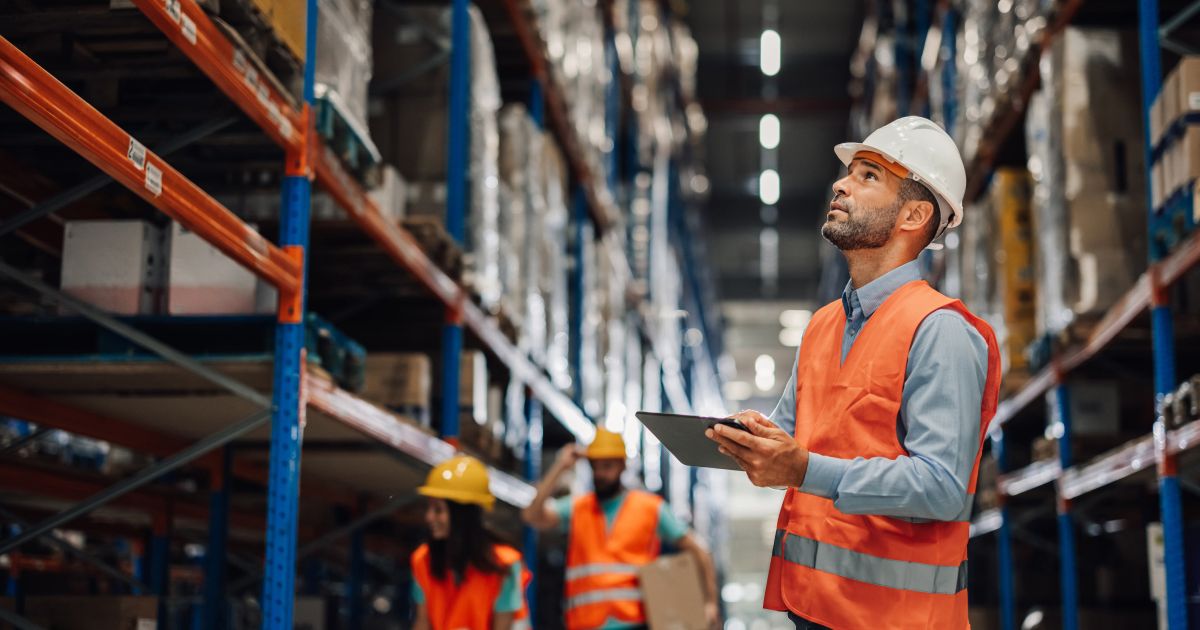
For growing businesses, the choice between 3PL and in-house logistics often comes down to capacity, control, cost and how much operational responsibility the business wants to retain. A Sydney-based 3PL can take on activities such as warehousing, inventory management, picking, packing and distribution, allowing businesses to expand without having to build and manage all of that infrastructure internally.
In-house logistics can still make sense where volumes are predictable, existing facilities are sufficient and direct operational control is a priority.
This article compares both models across cost, control, scalability and complexity, so growing businesses can work out which approach, or which mix of the two, actually fits their operation.
What Is 3PL Logistics?
3PL logistics involves outsourcing physical supply chain activities, such as warehousing, inventory management, fulfilment and distribution, to an external provider. A business can outsource its entire logistics operation or use a 3PL for specific functions while keeping other activities in-house.
A third-party logistics provider generally takes on some or all of the following:
- Warehousing – storing stock in a secure facility
- Inventory management – tracking stock levels and movement
- Fulfilment and pick and pack – picking, packing and preparing orders for dispatch
- Distribution – transporting goods to customers, retailers or distributors
- Value-added services – kitting, assembly and other preparation work
The exact scope depends on the provider and the business. Some companies outsource everything; others use a 3PL for specific functions, such as fulfilment or national distribution, while keeping other activities in-house.
What Is In-House Logistics?
In-house logistics means a business manages its own warehousing, inventory, fulfilment and distribution using its own staff, facilities and systems.
This gives the business direct oversight of every stage, from receiving stock through to final delivery. It also means the business carries full responsibility for warehouse space, staffing, equipment, technology and freight arrangements, rather than sharing that load with an external provider.
For smaller operations with straightforward, predictable order volumes, this level of control can be entirely manageable. The challenge tends to show up as volume, complexity or geographic reach increases.
What Is the Difference Between 3PL and In-House Logistics?
The key difference between 3PL and in-house logistics is where the day-to-day operational responsibility sits. With an in-house model, the business is responsible for warehouse space, staff, equipment, systems, stock handling and fulfilment processes. With a 3PL, those responsibilities can be transferred to an external provider, while the business maintains oversight through agreed processes, reporting and communication.
This distinction becomes more important as a business grows. The decision is not simply about who stores and dispatches the stock. It is also about who manages capacity, warehouse labour, operational systems and the additional workload created by higher volumes or greater fulfilment complexity.
3PL vs In-House Logistics: Cost Comparison

3PL logistics is not automatically cheaper than in-house logistics. The better-value option depends on comparing the full cost of running an internal operation against the complete cost of the outsourced services required.
Running logistics in-house involves more than warehouse rent, staff wages, equipment and technology. Businesses also need to account for recruitment and training, overtime during busy periods, warehouse expansion, systems management and the management time required to oversee the operation.
A 3PL brings its own service costs, so the comparison should consider the total cost of maintaining the internal operation against the full cost of the outsourced services required.
3PL vs In-House Logistics Comparison Table
| Factor | In-house logistics | 3PL logistics |
|---|---|---|
| Setup cost | Requires warehouse space, staff and systems | Avoids building logistics infrastructure independently |
| Control | Full control over day-to-day operations | Operations managed by the provider, with reporting access |
| Scalability | Limited by available space and staffing | Can flex with order volume through the provider |
| Staffing | Business hires, trains and manages logistics staff | Warehouse staffing handled by the 3PL provider |
| Technology | Requires internal investment in systems | Uses the provider’s existing inventory and fulfilment systems |
| Expertise | Builds internal knowledge over time | Draws on the provider’s established processes |
| Flexibility | Changes require internal planning and investment | Adjustments can often be made through the provider |
3PL vs In-House Logistics: Scalability
3PL logistics generally offers greater scalability than in-house logistics, because a provider’s existing infrastructure can absorb growth without the business needing to expand its own warehouse or staffing levels.
In-house logistics can become a constraint when order volumes grow faster than available space, staff or systems can handle. Common signs include running out of storage space, relying on overtime to keep up with orders, or struggling to maintain accurate stock counts during busy periods.
A 3PL may be able to absorb additional volume without requiring the business to expand its own warehouse, staffing or systems, depending on the provider’s available capacity. This is particularly relevant for businesses facing seasonal peaks, entering new sales channels, or expanding into new geographic markets.
3PL vs In-House Logistics: Control and Flexibility
In-house logistics offers more direct, hands-on control, while 3PL logistics offers more operational flexibility without the business needing to manage every function itself.
Businesses that value having eyes on every part of the process, or that have highly specific handling requirements, may prefer to keep logistics in-house. Businesses that need to adapt quickly to changing order volumes, new channels or seasonal demand often find that a 3PL’s existing flexibility works in their favour.
Neither option removes flexibility entirely. In-house teams can adapt processes internally, and most 3PL providers work with businesses to tailor their service rather than applying a single fixed process to every client.
What Are the Benefits of Using a 3PL for a Growing Business?
The main benefit of using a 3PL for a growing business is access to existing warehousing, technology and fulfilment infrastructure without the capital investment required to build it internally.
Key Benefits
- Access to existing infrastructure – no need to lease, fit out or expand a warehouse
- Specialist expertise – established processes for picking, packing, dispatch and returns
- Scalable capacity – logistics capacity that can adjust with order volume
- Inventory visibility – systems that provide access to stock information, movement and reporting
- Reduced internal workload – less need to manage warehouse staff, equipment and freight arrangements directly
- National reach – established transport networks for reaching customers and retailers across Australia
These benefits of outsourcing logistics tend to matter most for growing businesses managing rising order volumes or multiple sales channels at once.
When Should a Business Switch to a 3PL Provider?
A business should consider switching to a 3PL provider when order volumes are increasing, warehouse capacity is becoming constrained, fulfilment is becoming more complex, or internal logistics resources are limiting growth.
Common Triggers
- Order volumes growing faster than internal space or staff can manage
- Difficulty maintaining accurate inventory visibility
- Missed delivery windows or promotional deadlines
- Expansion into new sales channels, such as moving into eCommerce alongside wholesale
- Increasing complexity in returns and reverse logistics
If several of these apply, it may be worth evaluating whether logistics outsourcing could ease the pressure compared with expanding the current in-house setup.
Is 3PL Logistics Better Than Managing Logistics In-House?
Neither option is automatically better. 3PL logistics tends to suit businesses facing growth, complexity or capacity constraints, while in-house logistics can still work well for businesses with stable, predictable and manageable operations.
When In-House Logistics Still Makes Sense
- Order volumes are low and consistent
- Existing warehouse space is sufficient
- Internal staff can manage logistics without regular strain
- The business has simple distribution requirements or a limited product range
For businesses scaling quickly or juggling multiple channels, it may be worth comparing the cost and operational requirements of a 3PL with the resources needed to expand the existing in-house setup.
Can a Business Combine 3PL and In-House Logistics?
Yes. A hybrid logistics model allows a business to retain certain logistics activities internally while outsourcing others, such as warehousing, fulfilment or distribution, to a 3PL provider.
This can suit businesses that aren’t ready to outsource everything but need extra support in specific areas. For example, a business might keep core stock and local deliveries in-house while using a 3PL for overflow storage, national distribution, or fulfilment during peak periods. A hybrid approach lets a business scale gradually, testing outsourced logistics for the functions where it adds the most value before deciding whether to expand that relationship further.
What Should Businesses Look for in a 3PL Provider in Sydney?
Businesses should look for a Sydney 3PL provider with the right location, capacity, fulfilment capability and service range to match their specific logistics needs.
Sydney 3PL Checklist
- Location – proximity to relevant freight routes and ports, particularly for businesses moving stock through Sydney
- Capacity – enough warehouse space to accommodate current stock and future growth
- Fulfilment capability – support for both B2B and B2C order types, including pick and pack services
- Inventory visibility – online access to stock reporting and movement data
- Distribution capability – national delivery options and reliable transport coordination
- Scalability – capacity that can adjust for seasonal peaks or business growth
- Technology – systems that support clear, accessible reporting
- Customisation – willingness to tailor the service rather than fitting the business into a fixed package
A provider offering 3PL warehousing and logistics services that cover most or all of this checklist under one operation can reduce the need to coordinate multiple separate providers.
Why Choose a Sydney-Based 3PL Logistics Provider?

A Sydney-based 3PL logistics provider can give growing businesses a strategically located base for warehousing, fulfilment and nationwide distribution.
Pendulum Logistics was founded in 2006 as an alternative 3PL logistics provider, built around relationships, value and customised supply chain solutions rather than a fixed, one-size-fits-all package. As an Australian-owned and operated business, it works with clients to design logistics solutions around their actual requirements, covering warehousing, inventory management, fulfilment, distribution and value-added services under one operation.
For businesses in Sydney weighing up 3PL logistics against staying in-house, a provider that customises its service rather than applying a fixed model can give the business more flexibility when deciding which functions to outsource.
Frequently Asked Questions
What is 3PL logistics?
3PL logistics is the outsourcing of logistics activities such as warehousing, inventory management, fulfilment and distribution to an external logistics provider. The exact services included depend on the provider and the business’s requirements.
Is 3PL cheaper than in-house logistics?
Not necessarily. The better-value option depends on warehouse costs, staffing, equipment, technology, order volumes and the services required. Businesses should compare the total cost of operating internally with the complete cost of outsourcing.
When should a growing business use a 3PL?
A business may consider a 3PL when order volumes are increasing, warehouse capacity is becoming constrained, fulfilment is becoming more complex or internal logistics resources are limiting growth. Outsourcing can provide access to established logistics infrastructure and expertise.
What should I look for in a 3PL provider in Sydney?
Consider warehouse location, capacity, fulfilment services, inventory management, distribution capability, scalability, technology, customer service and the provider’s ability to customise its services. The provider should also fit the business’s current and expected future requirements.
Can I use a 3PL while keeping some logistics operations in-house?
Yes. A hybrid model can combine internal logistics with outsourced services. This allows businesses to retain control over selected activities while using a 3PL for areas such as warehousing, fulfilment or distribution.
Ready to Scale Your Logistics?
Growth shouldn’t be slowed down by a warehouse that’s run out of room or a fulfilment process held together with overtime and spreadsheets.
If you’re comparing 3PL and in-house logistics, contact Pendulum Logistics to discuss your warehousing, fulfilment and distribution requirements. Our team can help you assess the logistics model and services that best fit your current operation and growth plans.
