




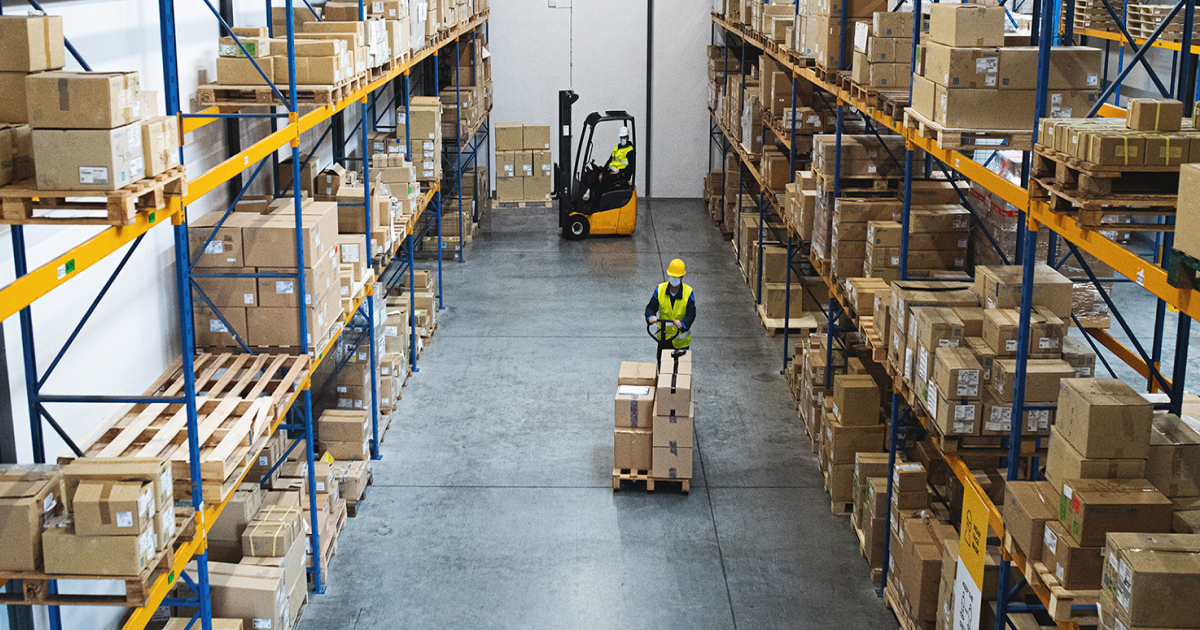

3PL warehousing can improve inventory management and order fulfilment by combining professional storage, stock tracking, picking, packing and dispatch within one coordinated operation. With the right systems and processes in place, businesses gain greater inventory visibility, reduce manual handling and can scale fulfilment as demand changes.
For growing FMCG businesses, these benefits can become increasingly important as order volumes rise and managing warehouse operations in-house becomes more complex. Pendulum Logistics has provided customised 3PL solutions since 2006, helping businesses integrate warehousing, fulfilment and related logistics functions through its 3PL warehousing services.
What Is 3PL Warehousing?
3PL warehousing is when a business outsources its warehousing and related logistics operations to a third-party logistics provider. Depending on the arrangement, this can include receiving, storage, inventory management, order fulfilment, picking, packing, distribution and returns.
Instead of investing in and managing every part of the operation internally, a business uses the provider’s warehouse, people, systems and processes.
A 3PL warehouse can therefore become an extension of a business’s own operation. Pendulum Logistics takes this approach by working with clients to understand their business requirements, establish relevant processes and develop customised solutions rather than applying a standardised model.
This is particularly relevant for businesses managing multiple products, fluctuating demand or both B2B and B2C orders, where inventory and fulfilment need to work together rather than operate as separate functions.
How Does 3PL Warehousing Improve Inventory Management?

3PL warehousing improves inventory management through better stock visibility, structured warehouse processes and integrated reporting. This gives businesses a clearer view of what has been received, stored, distributed and returned.
Effective warehouse inventory management depends on accurate information at every stage. A suitable 3PL arrangement can help businesses:
- Maintain more accurate stock records
- Track inventory movements
- Improve visibility across warehouse operations
- Identify stock levels and movements more efficiently
- Support procurement and replenishment decisions
- Manage returns through the same inventory system
Pendulum’s warehousing and distribution in Sydney provides inventory visibility across product receipt, stock reporting, distribution and returns, with reporting options that can be adapted to business requirements.
This integration matters because inventory information is only useful when it can support operational decisions. When stock data is accurate and accessible, businesses can respond more confidently to customer orders, procurement requirements and changes in demand.
How Does 3PL Warehousing Improve Order Fulfilment?
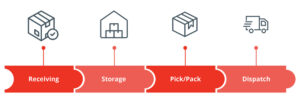
3PL warehousing improves order fulfilment by bringing inventory, picking, packing and dispatch into a structured workflow. Established warehouse processes and systems can help businesses process orders consistently while accommodating changes in demand.
The process typically involves:
- Receiving and processing an order
- Locating the required inventory
- Picking the correct products
- Packing the order according to requirements
- Checking the order before dispatch
- Preparing it for delivery through the appropriate distribution network
This is where a pick and pack warehouse operation becomes closely connected to inventory management. If inventory records are inaccurate, staff may struggle to locate stock or fulfil orders correctly. If inventory is well managed, the fulfilment process can operate with greater confidence.
Pendulum provides product fulfilment for both B2B and B2C channels, with distribution models designed around different business requirements. Its systems also provide visibility across the fulfilment and distribution process.
Businesses can also explore Pendulum’s Pick and Pack services for further information on its fulfilment capabilities.
What’s the Connection Between Inventory Management and Order Fulfilment?
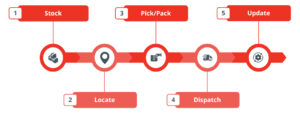
Inventory management and order fulfilment are closely connected because accurate stock information is essential to fulfilling orders reliably. Inventory management determines what is available, while fulfilment manages how those products are picked, packed and dispatched to the customer.
Consider a simple order:
- Inventory management confirms the product is available
- The warehouse team locates the correct stock
- The product is picked and packed
- The order is dispatched
- Inventory records are updated to reflect the movement
When these stages operate through disconnected systems or processes, errors and delays can become harder to identify. An integrated approach gives businesses greater visibility across the movement of products from receipt through to distribution.
Pendulum’s systems are designed to provide visibility across inventory and distribution, with customised reporting and processes based on individual business requirements.
What Are the Benefits of Outsourcing Warehousing to a 3PL?
The main benefits of outsourcing to a 3PL include improved inventory control, more efficient fulfilment, greater scalability and access to established warehouse infrastructure and systems. The right provider can also reduce the operational burden of managing these functions internally.
For growing businesses, the key benefits include:
Improved inventory accuracy
Structured processes and integrated systems can provide better visibility of stock movements and inventory levels.
More efficient fulfilment
Experienced warehouse teams can manage picking, packing and dispatch as part of an established workflow.
Greater scalability
A 3PL can help businesses accommodate changing order volumes without requiring them to continually expand their own warehouse operations.
Better reporting and visibility
Integrated systems can provide access to information across inventory, fulfilment, distribution and returns.
Reduced operational complexity
Outsourcing multiple logistics functions to one provider can reduce the need to coordinate separate warehouse, fulfilment and distribution operations.
Pendulum’s broader warehousing and distribution in Sydney includes storage and inventory management, product fulfilment, national distribution and reverse logistics.
When Should a Growing Business Consider 3PL Warehousing?
A growing business should consider 3PL warehousing when order volumes are becoming difficult to manage, warehouse capacity is limited, inventory visibility is declining or fulfilment errors and delays are increasing. Seasonal demand can also make outsourcing a practical option.
Common signs include:
- Warehouse space is becoming a constraint
- Internal teams are spending too much time on fulfilment
- Inventory records are difficult to maintain accurately
- Order volumes fluctuate significantly
- Fulfilment errors are increasing
- Business needs better reporting and stock visibility
- Expansion requires greater distribution capacity
The decision does not need to be based on growth alone. Businesses may also consider 3PL when they want to improve an existing operation without taking on the cost and management requirements associated with additional warehouse infrastructure.
3PL Warehousing vs In-House Inventory Management: Which Is Right for You?
There is no universal answer. The better option depends on order volumes, available warehouse space, internal resources, growth plans and the level of operational control a business needs.
| In-house inventory management | 3PL warehousing |
|---|---|
| Business manages warehouse operations internally | Specialist provider manages agreed logistics functions |
| Requires internal warehouse space and resources | Uses established warehouse infrastructure |
| Business manages inventory systems and reporting | Provider can offer integrated systems and reporting |
| Scaling requires additional internal capacity | Capacity can be adjusted around changing requirements |
| Fulfilment remains an internal responsibility | Picking, packing and dispatch can be outsourced |
For some businesses, keeping inventory operations in-house remains appropriate. For others, outsourcing can provide the infrastructure and expertise needed to support growth without adding the same level of operational complexity.
Why Choose Pendulum Logistics for 3PL Warehousing in Sydney?
Pendulum Logistics combines customised processes, warehousing, inventory management, fulfilment and distribution to create logistics solutions aligned with individual business requirements. Founded in 2006, Pendulum has built its 3PL offering around relationships, value and culture rather than a standardised approach.
The business works with clients to understand their requirements, establish processes and identify opportunities for optimisation. Its Sydney logistics centre supports nationwide distribution, while its systems are designed to provide visibility and traceability across warehouse and distribution operations.
For businesses looking for 3PL warehousing Sydney solutions, this combination of local operations, national distribution and customised logistics support can provide a more integrated approach to inventory and fulfilment.
Pendulum’s Warehousing & Distribution services include storage and inventory management, product fulfilment, distribution and reverse logistics.
Frequently Asked Questions
What is 3PL warehousing?
3PL warehousing is when a business outsources storage, inventory management and related fulfilment functions to a third-party logistics provider.
How does 3PL warehousing improve inventory management?
It can improve inventory management through structured warehouse processes, integrated systems, stock tracking and better reporting visibility.
What’s the difference between inventory management and order fulfilment?
Inventory management focuses on tracking and controlling stock, while order fulfilment involves picking, packing and dispatching customer orders. Accurate inventory supports reliable fulfilment.
When should a growing business consider 3PL warehousing?
Consider 3PL when order volumes are outgrowing current capacity, warehouse space is limited, inventory visibility is poor or fulfilment errors are increasing.
Is 3PL warehousing more cost-effective than managing inventory in-house?
It depends on the business. 3PL can reduce fixed warehouse and staffing requirements, but the right option depends on order volumes, growth plans and operational needs.
Why choose a Sydney-based 3PL provider?
A Sydney-based provider can offer local accessibility while supporting distribution to customers and retailers across Australia.
Talk to Pendulum Logistics

The right warehousing model should support the way your business operates today while giving you room to grow. When inventory management, fulfilment and distribution work together, businesses can gain greater visibility and control across their supply chain.
Pendulum Logistics provides customised 3PL solutions for businesses looking to outsource or improve their warehousing and fulfilment operations. With experience across logistics, production and procurement, Pendulum works with clients to develop processes aligned with their individual requirements.
If you’re considering 3PL warehousing in Sydney, speak with the Pendulum Logistics team about your requirements and explore how a tailored approach could support your inventory and fulfilment operations.
Call 02 9330 1500 or email info@pendulumlogistics.com to speak with Pendulum Logistics.
