




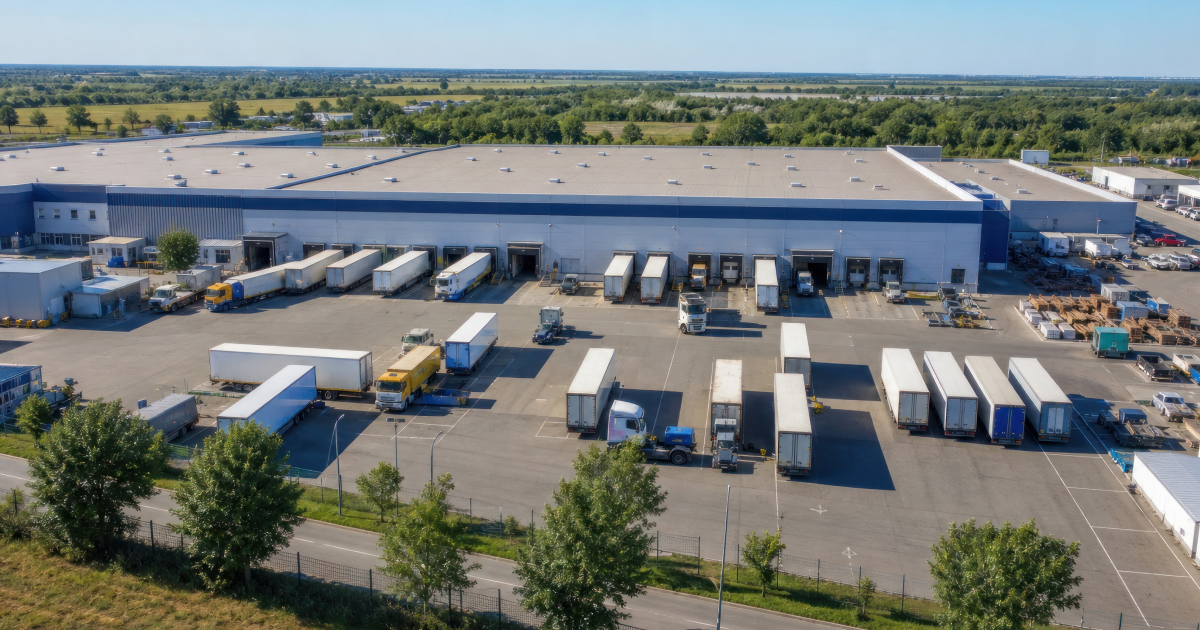
A business should consider outsourcing its warehousing and distribution when internal logistics operation becomes difficult to scale, manage or operate efficiently. Increasing order volumes, limited warehouse capacity, rising labour requirements, complex fulfilment needs, inventory visibility issues and expanding distribution networks are common signs that a specialist logistics provider may be a better fit. For businesses managing frequent returns or products moving back through the supply chain, reverse logistics can also be a reason to consider outsourcing.
This article helps businesses managing warehousing and distribution in Sydney look at the operational triggers, cost considerations and use a practical checklist to decide whether their operations should stay in-house, move to a 3PL, or run as a hybrid of both.
What Does Outsourcing Warehousing and Distribution Mean?
Outsourcing warehousing and distribution means engaging a specialist logistics provider to manage some or all of the physical handling of stock, from receiving and storage through to fulfilment, distribution and returns, rather than managing those functions entirely in-house.
This typically covers:
- Receiving: checking and recording stock as it arrives
- Storage: housing inventory in a secure warehouse facility
- Inventory management: tracking stock levels, movement and accuracy
- Fulfilment and pick and pack: picking, packing and preparing orders for dispatch
- Distribution: transporting goods to retailers, distributors or end customers
- Returns and reverse logistics: processing goods that come back through the supply chain
- Value-added services: kitting, assembly and other preparation work before dispatch
A Sydney 3PL provider can manage several of these functions together or support specific areas where a business needs additional capacity.
When Should a Business Outsource Its Warehousing and Distribution?
A business should outsource warehousing and distribution when internal capacity, staffing or systems can no longer keep pace with order volumes, complexity or growth.
The trigger will differ between businesses, but the underlying pressures are often similar: insufficient space, staffing constraints, limited inventory visibility or delivery requirements that have outgrown what an internal team can coordinate. The next two sections break these down separately for warehousing and distribution.
Common Triggers Across Both Functions
- Rapid growth in order volumes or SKU count
- Seasonal demand spikes that strain internal resources
- Expansion into new sales channels, such as moving from wholesale into eCommerce
- Increasing customer expectations around delivery speed and order accuracy
What Are the Signs a Business Has Outgrown Its Warehouse?
The clearest signs that a business has outgrown its warehouse include running out of physical space, struggling to find or track stock, and relying on staff overtime just to keep up with day-to-day operations.

Warning Signs to Watch For
- Capacity constraints: stock is stored in overflow areas, aisles or offsite, rather than in properly racked storage
- Staffing pressure: existing staff are stretched across receiving, picking, packing and dispatch without enough support
- Fulfilment delays: orders take longer to process than they should, particularly during busy periods
- Poor inventory visibility: stock counts are inaccurate, or checking availability requires a physical walkthrough
- Growing SKU complexity: a wider product range makes manual tracking harder to manage
- Seasonal strain: peak periods regularly push the warehouse beyond what it was set up to handle
If several of these issues are occurring at the same time, it may be worth assessing whether outsourced warehousing could ease the pressure.
What Are the Signs Distribution Should Be Outsourced?
Distribution should be considered for outsourcing when a business is delivering to more locations, customers or retail partners than its current transport arrangements can manage reliably.

Distribution Complexity Indicators
- More delivery destinations: national retailers, independent stores or a growing customer base spread across regions
- Mixed B2B and B2C requirements: bulk deliveries to retailers alongside individual parcels to consumers, often needing different handling
- Retailer compliance requirements: specific delivery windows, labelling or documentation demanded by major retail partners
- Carrier coordination: managing multiple freight providers becomes harder as delivery volume and geographic spread increase
- Tracking and visibility gaps: customers or retail partners expect proof of delivery and consignment tracking that internal systems may not support
For businesses distributing nationally, the growing complexity of transport coordination may make it worth assessing a specialist Sydney distribution provider rather than building and managing an internal transport network.
What Are the Benefits of Outsourcing Warehousing and Distribution?
Outsourcing warehousing and distribution gives businesses access to storage infrastructure, logistics expertise, fulfilment capability and inventory systems without needing to manage every function internally.

Key Benefits
- Access to existing infrastructure: no need to lease, fit out or expand a warehouse
- Specialist expertise: experienced staff and established processes for picking, packing and dispatch
- Scalable capacity: warehouse capacity can flex with order volume rather than remaining fixed
- Improved inventory visibility: systems that provide access to stock information, movement and reporting
- Reduced operational load: less need to manage warehouse staff, equipment and freight arrangements directly
- National reach: established transport networks for reaching retailers and customers across Australia
The relevance of these benefits depends on the business’s operating model, growth plans and the functions it chooses to outsource.
Is Outsourced Warehousing More Cost-Effective Than Managing It In-House?
Not necessarily. Whether outsourced warehousing is more cost-effective depends on comparing the full cost of running an internal operation against the complete cost of the outsourced services required.
Internal warehousing costs include rent, staff wages, equipment, technology, insurance and ongoing management time. Outsourced warehousing brings these costs into a service arrangement, but the overall cost depends on order volume, product type and the scope of services required.
In-House vs Outsourced Warehousing and Distribution
| Factor | In-house warehousing | Outsourced warehousing |
|---|---|---|
| Setup cost | Requires warehouse space, staff and systems | Avoids building fulfilment infrastructure independently |
| Control | Full control over day-to-day operations | Operations managed by the provider, with reporting access |
| Scalability | Limited by available space and staffing | Can flex with order volume through the provider |
| Staffing | Business hires, trains and manages warehouse staff | Staffing handled by the logistics provider |
| Technology | Requires internal investment in systems | Uses the provider’s existing inventory and fulfilment systems |
| Expertise | Builds internal knowledge over time | Draws on the provider’s established processes |
| Flexibility | Changes require internal planning and investment | Adjustments can often be made through the provider |
For businesses with steady, predictable volumes and existing infrastructure, managing warehousing in-house may still be the more practical option. For businesses facing growth, seasonal swings or multi-channel complexity, outsourcing warehousing and distribution may offer greater flexibility without requiring the business to expand its internal infrastructure.
When Should a Business Outsource Reverse Logistics?
A business should consider outsourcing reverse logistics once product returns become time-consuming to process, difficult to track, or start affecting inventory accuracy.
Reverse logistics covers the handling of goods that move backward through the supply chain, including returns, exchanges and faulty stock. If poorly managed, returns can consume significant staff time and affect inventory accuracy.
Reverse logistics services from a specialist provider are built to keep returns tracked and visible, so returned stock is processed and reflected in inventory promptly rather than sitting unresolved.
This becomes particularly relevant for eCommerce businesses, where return volumes are often higher than in traditional retail, and for any business where returns management has started to feel like a separate operation in itself rather than a small add-on task.
When Should a Business Use a 3PL Provider?
A business should use a 3PL provider when it needs warehousing, inventory management, fulfilment and distribution to work together as one connected operation, rather than being managed as separate, disconnected tasks.
A third-party logistics provider can bring storage, technology, staffing and transport coordination together within one logistics model. This matters most when a business is trying to coordinate multiple moving parts internally, such as tracking stock in one system, processing orders in another, and relying on a separate transport provider for delivery.
Businesses may consider 3PL logistics services in Sydney when growth or operational complexity makes an internal, piecemeal approach harder to manage.
What Should Businesses Look for in a Warehousing and Distribution Provider in Sydney?
Businesses should look for a Sydney provider with the right location, capacity, technology and service range to match their specific fulfilment and distribution needs.

Sydney Provider Checklist
- Location: proximity to relevant freight routes and ports, particularly for businesses moving stock through Sydney
- Capacity: enough warehouse space to accommodate current stock and future growth
- Inventory visibility: online access to stock reporting, movement and returns data
- Fulfilment capability: support for both B2B and B2C order types, including pick and pack services
- Distribution reach: national delivery options, including road freight, overnight express and same-day services where required
- Returns management: a defined process for handling reverse logistics and returns
- Technology and reporting: systems that provide clear, accessible reporting rather than manual updates
- Scalability: capacity that can adjust for seasonal peaks or business growth
- Customisation: willingness to tailor the service rather than fitting the business into a fixed package
A provider offering warehousing and distribution services that cover most or all of this checklist under one operation can reduce the need to coordinate multiple logistics providers.
Can a 3PL Manage Warehousing, Fulfilment and Distribution Together?
Yes. A 3PL can manage warehousing, fulfilment and distribution as one connected process, covering everything from stock receipt through to final delivery.
This connected approach also extends to related services such as cross docking, where goods are moved directly from receiving through to onward transport with minimal time spent in storage.
For businesses distributing high-volume or time-sensitive stock, having this managed by the same provider that handles warehousing and fulfilment can reduce the coordination gaps that come from using separate providers for each function.
Is Outsourcing Logistics Better Than Managing It In-House?
Neither option is automatically better. Outsourcing logistics tends to suit businesses facing growth, complexity or capacity constraints, while in-house management can still work well for businesses with stable, predictable and manageable operations.
When In-House Still Makes Sense
- Order volumes are low and consistent
- Existing warehouse space is sufficient
- Internal staff can manage fulfilment without regular strain
- The business has limited SKUs or simple distribution requirements
When a Hybrid Model Might Work
Some businesses manage core stock internally while outsourcing overflow storage, seasonal fulfilment, or specific functions such as returns or national distribution. This hybrid model can be a practical middle step for businesses that aren’t ready to outsource everything but need extra support in specific areas.
Which Logistics Model May Suit Your Business?
| If your business… | Model to consider |
|---|---|
| Has stable volumes, sufficient warehouse capacity and an established internal team | In-house |
| Is experiencing warehouse capacity or staffing constraints | Outsourcing |
| Has seasonal peaks or fluctuating demand | 3PL or hybrid |
| Is expanding into new sales channels or geographic markets | 3PL or hybrid |
| Needs warehousing, fulfilment and distribution managed together | 3PL |
| Wants to retain selected logistics functions internally | Hybrid |
Frequently Asked Questions
When should a business outsource warehousing and distribution?
Consider outsourcing when warehouse capacity, staffing, fulfilment, inventory management or distribution complexity is becoming a constraint on growth or operational efficiency.
Is outsourced warehousing cheaper than managing a warehouse in-house?
Not necessarily. Compare total internal costs such as rent, labour, equipment, technology and management with the complete cost of the outsourced services required.
What are the benefits of outsourcing warehousing and distribution?
Outsourcing can provide access to warehouse infrastructure, logistics expertise, fulfilment capability, inventory systems and scalable operational capacity without requiring the business to manage every logistics function internally.
When should a business use a 3PL provider?
A 3PL may be appropriate when a business needs integrated warehousing, inventory, fulfilment and distribution capabilities, particularly when growth or operational complexity makes an internal model harder to manage.
What should I look for in a warehousing and distribution provider in Sydney?
Consider location, capacity, transport access, inventory visibility, fulfilment, distribution, returns management, reporting, scalability, technology and the provider’s ability to customise its service.
Ready to Simplify Your Warehousing and Distribution?
If your warehousing, fulfilment or distribution requirements are becoming harder to manage internally, Pendulum Logistics can help you assess a more practical operating model.
Contact Pendulum Logistics to discuss your warehousing, fulfilment, distribution and broader logistics requirements.
